ISO Consultants for UAE Businesses: Everything Businesses Should Know
Wiki Article
ISO Certification In Abu Dhabi: A Practical Guide For Local Companies
Abu Dhabi's business environment carries its own set of pressures in relation to ISO certification. This is shaped because of the number of government entities, big industrial firms, and the strict rules for tendering. Local businesses who are navigating ISO an ISO certification process for the very first time knowing how to apply the principles of Abu Dhabi makes the process considerably more daunting.Government and Semi-Government bids set the pace
A significant share of Abu Dhabi's economy is run by governments and large industrial players, many which have formalized ISO certification as an eligibility requirement for suppliers and contractors. This means the option to be certified is mostly driven less from personal ambition and more driven by the reality of which contracts a company wants to continue to be eligible for.
The Energy and the Industrial sectors have Particular Expectations
The energy and industrial sectors have particularly strict expectations in terms of environmental and safety in light of the magnitude and risk-based nature of operations in these areas. Companies that are supplying to this sector even indirectly, tend to discover that the requirements for certification from their clients directly are higher than the minimum guidelines, reflecting the company's internal business culture regarding risk and management.
Choose a standard that matches Your Actual Business
One of the most common mistakes is to pursue a certification merely because a competitor has it without first determining which standard truly matches the business's risk profile and client expectations. Logistics company's priorities appear quite different from those of a facilities management firm, and beginning with a clear analysis of what customers and tenders actually require is a way to avoid waste of time later.
There is a Gap Assessment Stage is a something to consider
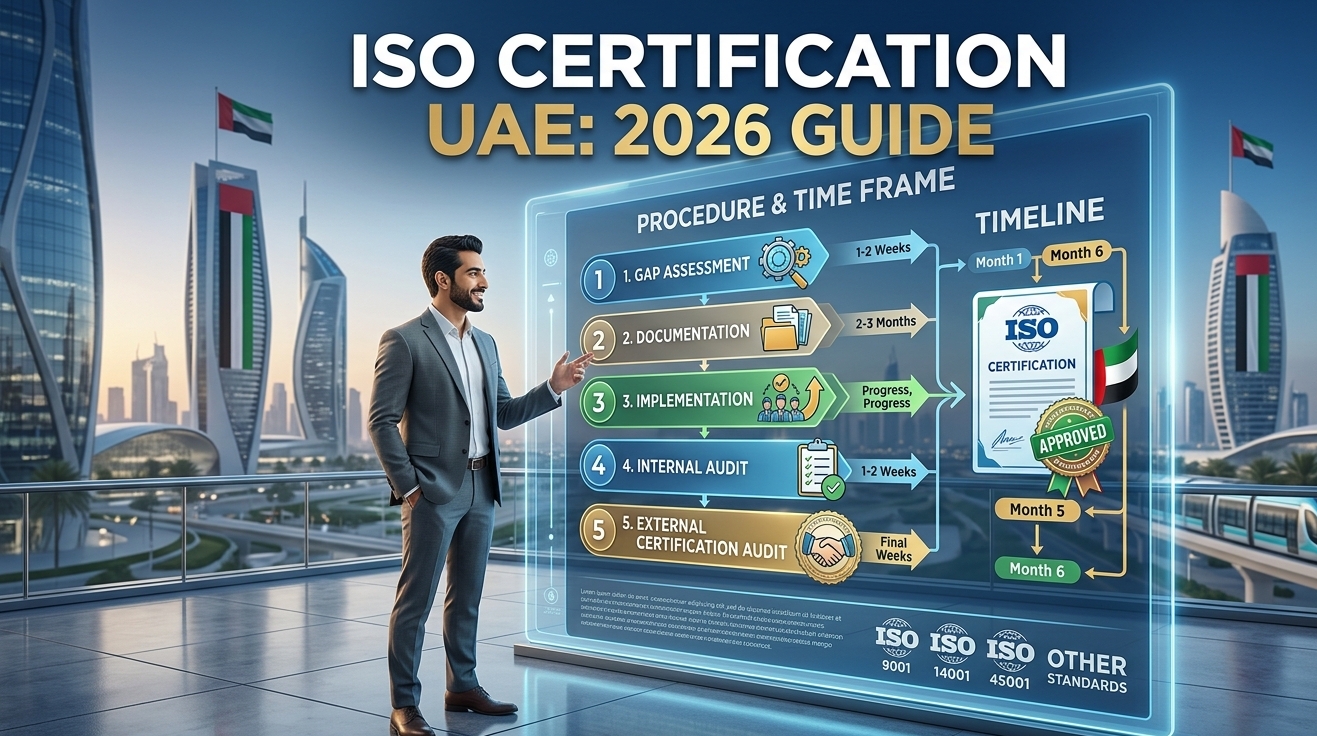
Before formal implementation begins, a proper gap assessment in relation to the relevant standard will show the degree to which current practice is in line with the requirements and what genuine work is needed. In the event of rushing or skipping this step, it will result in a longer and more costly implementation phase later, as holes that might have been discovered early but are discovered later during the audit within the audit.
Documentation Requirements Have More Control Than They Appear
A lot of first-time applicants think ISO documents will be intimidating, but the modern management system requirements are significantly more flexible with regards to documentation than previous versions were focusing on proving processes are genuinely followed rather than simply documented. A pragmatic approach to documentation, based around what the organization would want to record in the first place, is likely to create the kind of system that's actually used rather than one that's strictly for auditing.
Local Support Options have gotten bigger The Options for Local Support Have Explended
Abu Dhabi now has a more extensive pool of certified and consultants with local expertise than even five years ago. This has reduced the necessity of relying solely on international firms without on-the-ground experience. This local expansion has generally made the process quicker and more responsive to the specific needs of operating within the emirate.
Maintaining certification requires a continuous commitment.
Certification isn't a single accomplishment it's an ongoing commitment, requiring regular surveillance audits that are usually annually, in order to prove that the management system is maintained. Companies that take the initial certificate as a finish line instead of the start point often struggle at future audits, while those who implement the standards into their daily routines experience much less difficulty recertification.
Free Zone businesses are faced with Specific Considerations
Companies operating out of the various free zones in Abu Dhabi might assume that certification requirements are different from those for mainland businesses, but the principles of international standards remain identical regardless of the jurisdiction. What is different is the specific client and tender requirements in each tenant environment, which is important to discuss directly with free zone authorities or prospective clients rather than accepting they are all the same.
A Realistic Budgeting Approach for the Full Process
For first-time applicants, they often plan only for the external audit expense that is not taking into account the internal time investment, possible consultancy fees, and necessary operational changes to close real gaps discovered during assessment. A realistic budget takes into account all the steps from starting the assessment right through to certificate issuing, not just the invoice for the final audit, to avoid unpleasant surprises in the middle of the project.
Timing Certification Around Business Cycles
Businesses that have clear seasonal peaks commonly found in construction as well as sector related to events, often find it easier to schedule the more demanding phases of implementation and audit during slower times, rather than having to plan the certification process in conjunction with peak operational demands. Certification bodies in Abu-Dhabi are generally flexible with planning their schedules. Increasing timing preferences early during the process can facilitate a more smooth experience for all those who is involved.
The Business of Learning from the Ones That Have So Far
Speaking directly with other Abu Dhabi businesses in a similar field who have had certification can provide facts that experts or certification bodies will be willing to divulge, ranging from realistic timelines to which aspects of the audit tend to catch new applicants off and off. This type of insight from other businesses is incredibly valuable and should be exploring before you commit on a specific vendor or timeframe.
Working With Government Liaison Requirements
Businesses that seek certification specifically in order to participate in government tenders for government tenders in Abu Dhabi should confirm exactly the scope of certification and version a particular tender has in order to ensure that the requirements are not referring to specific editions and/or additional local standards that are different from the base international standard. This information should be confirmed directly with the authority responsible for tendering prior to commencing the certification process helps avoid the risk of applying for certification against a scope that is not the correct one.
To Abu Dhabi businesses approaching certification for the first time, success generally is determined by choosing the right criteria for operational realities, taking the planning stages seriously, and considering certification as an ongoing operational procedure rather than something to tick off once and forget about. Abu Dhabi businesses that approach certification with the same level of preparation rather than looking at it as a rushed procurement requirement to rush through, typically end up having a stronger, more genuinely useful management system at the end. None of this needs to be navigated alone, since Abu Dhabi's ever-growing pool of highly skilled local consultants and certification bodies that provide genuinely skilled assistance is now more readily available than at any time before. Taking advantage of the expanding local knowledge base makes the whole journey much more manageable than it used to be. Have a look at the top rated ISO Consultant UAE for more advice.
ISO 45001 vs ISO 22000 Which One Is The Best For Your Business Really need?
Companies who are brand new to ISO certification are often led to believe that different standards are universally interchangeable while in fact ISO 45001 and ISO 22000 deal with completely different operational risks and fit very distinct types of companies. Knowing what each standard covers makes it much easier to decide which one or if both fits you operations.What ISO 45001 Covers
ISO 45001 is the international standard for occupational health and safety management systems. It focuses on discovering workplace hazards, assessing risks to employees and other personnel affected by the activities, and putting systems in place to prevent injury and illness. It can be applied to almost any organization with employees as well as physical businesses, but it holds particular significance in manufacturing, construction as well as oil and gas and logistics. These are industries where dangers for injury are typically higher.
What ISO 22000 Covers
ISO 22000, by contrast it is the internationally recognized standard for food safety management systems, built around the identification and control of hazards across all stages of the food chain, from handling raw materials to storage, processing and distribution. It applies specifically to businesses involved in the food chain in a particular capacity, which includes producers, processors packaging companies, as well as food service operators, rather than all businesses.
What's the reason?
Both standards are based on a comparable structure for a high-level management system, share common language around risk identification and constant development, and often sold in conjunction through certification organizations offering many different services. The structural similarities can cause them to appear as if they're more comparable than they are, when the substantive nature of each standard is distinct categories of risk.
The Business that Might Need Both
A food manufacturing business such as this requires both of these standards, not picking between them since ISO 22000 addresses the safety of the food product itself as ISO 45001 addresses the safety for the workers involved in its production. These are different risk categories which can be found within the same company, which is why a large number of food-related companies in the UAE possess both certifications simultaneously.
A Business That Clearly requires One
A construction business that is not involvement in food production has no genuine need for ISO 22000, just as the food distribution industry with less than minimal exposure to physical hazards at work could legitimately prefer ISO 22000 over ISO 45001, at least initially, where resources are insufficient and one risk type is clearly more critical or more pressing than the alternative.
What to Do If You're Uncertain
The most effective way to select the best way to go about it is by mapping your operation against each standard's boundaries rather than deciding based upon what your competitors are doing. If your company handles any kind of process, food or food in any capacity, ISO 22000 deserves serious investigation. If your operations involve physical hazards at work for the employees or other visitors regardless of industry, ISO 45001 is worth evaluating independently of any security concerns related to food.
The process for certifying both has a common path
Whichever standard is used the certification process follows a broadly similar structure: gap assessment against the applicable standard, application in the proper processes and documentation internal audits, and an external certification audit that is two-stage and ongoing inspections to ensure the certificate.
The Cost Implications of Pursuing Both
Businesses genuinely needing both certifications might be concerned about having to double their cost and effort, but most find that using both of the standards together, as part of the use of an integrated auditor program through the same certification agency, reduces administrative overheads that are duplicated having two separate, unrelated certification projects at different dates.
Common Mistakes Companies Make in this Decision
An error that is often made is to pursue ISO 45001 purely because a competitor is certified and without first taking a thorough look at whether the risk to safety of workers is an important element in your own business operations, or pursuing ISO 22000 based on assumption instead of having a true importance of food safety in the business. Start with an honest assessment of operational risk and not based on competitor behavior, consistently produces a better certification decision.
Getting Expert Input Before Committing
With the way that they differ, and how different the two standards genuinely are, businesses that aren't certain which one is applicable to them would benefit greatly from an initial meeting with a certification body or consultant before making a final decision in the sense that a brief scoping conversation upfront can prevent an expensive and time-consuming misstep further into the process.
The Top Line for UAE Businesses
Instead of interpreting ISO 45001 and ISO 22000 as two competing options to select between, a better idea is to think of them as being completely separate areas of risk that simply happen that both are relevant to some businesses but not others. A clear, objective evaluation of your own risk profile for your operations, rather than looking at what comparable-sounding competitors have been doing, is the most secure way to arrive at the best decision.
Involving Frontline Staff in the Decision
Frontline personnel, whether on construction sites or at the food production process, generally have the most clear comprehension of where genuine risks to safety or food handling are. Involving them with the initial risk assessment for the standard process, rather than simply focusing on certification as a managerial exercise, is likely to make a more precise, and practical management system.
The decision to choose the right one from ISO 45001 and ISO 22000 or even recognizing the need for both, boils in the form of a realistic assessment of the risk exposure of your company rather than assuming the standards are interchangeable alternatives that address the same issues. Whatever standard, or combination of standards is applicable to your company and the end goal remains the same: establishing an incredibly safe, effective operation, instead of creating a certificate in order to satisfy an external requirement. No one of these decisions has to be taken separately in the sense that a short chat with an experienced expert who is acquainted of both standards is likely to let you know the best route to take within the course of a single conversation. Making this decision correctly early is a great way to avoid time and expense further along the certification process. An objective and clear view of activities, and not just a preconceived notion is the best beginning point any time. This single, simple step will save you months of unnecessary confusion later. This is where precision pays off throughout the remainder of the process. Check out the most popular ISO 22000 Certification for blog info.